Empower Your E-Commerce Design with 130,000+ Hours of UX Research
Baymard Institute uncovers what designs cause usability issues, how to create “State of the Art” user experiences, and measure how your UX performance stacks up against leading e-commerce sites.
UX Articles
379 free articles covering 5% of Baymard’s large-scale e-commerce UX research findings.
See all articlesUX Benchmarks
Case studies of 244 top e-commerce sites. Ranked using 215,000+ UX performance scores.
Discover benchmarksPage Designs
14,000+ annotated design examples, for systematic inspiration on e-commerce page types.
Explore designsPremium Research
Get full access to Baymard’s 130,000+ hours of research and empower your UX decisions.
Learn moreResearch-Based Articles
Bi-weekly UX articles based on Baymard’s e-commerce research

Mass Merchant Sites: New UX Benchmark with 6,000+ Performance Scores and 6,000+ Best Practice Examples
April 16, 2024
B2B Electronics: Use “Product Tables” to Display Product Listings on Desktop
April 10, 2024
Luxury Goods Sites: New UX Benchmark with 3,500+ Performance Scores and 2,500+ Best Practice Examples
April 2, 2024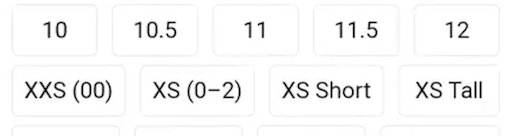
Apparel E-Commerce: Visually Group and Clearly Label Size Filter Options
March 26, 2024
Premium Research Database
Make Research-Based UX And Design Decisions
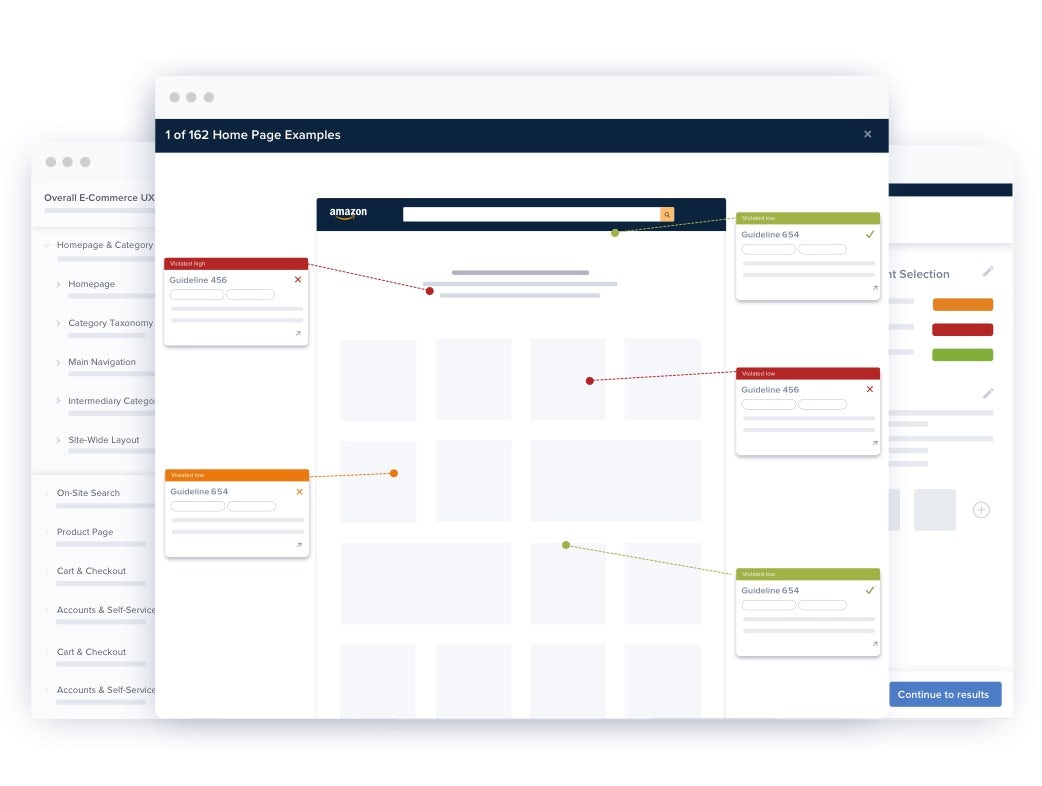
Use Baymard’s comprehensive UX research database to create “State of the Art” user experiences, and see how your UX performance stacks up.
With Baymard Premium you will get access to 650+ design guidelines and 215,000+ performance scores — insights already used by several of the world’s leading sites.
UX Audit Service
The 40 Most Important Changes You Can Make To Your UX
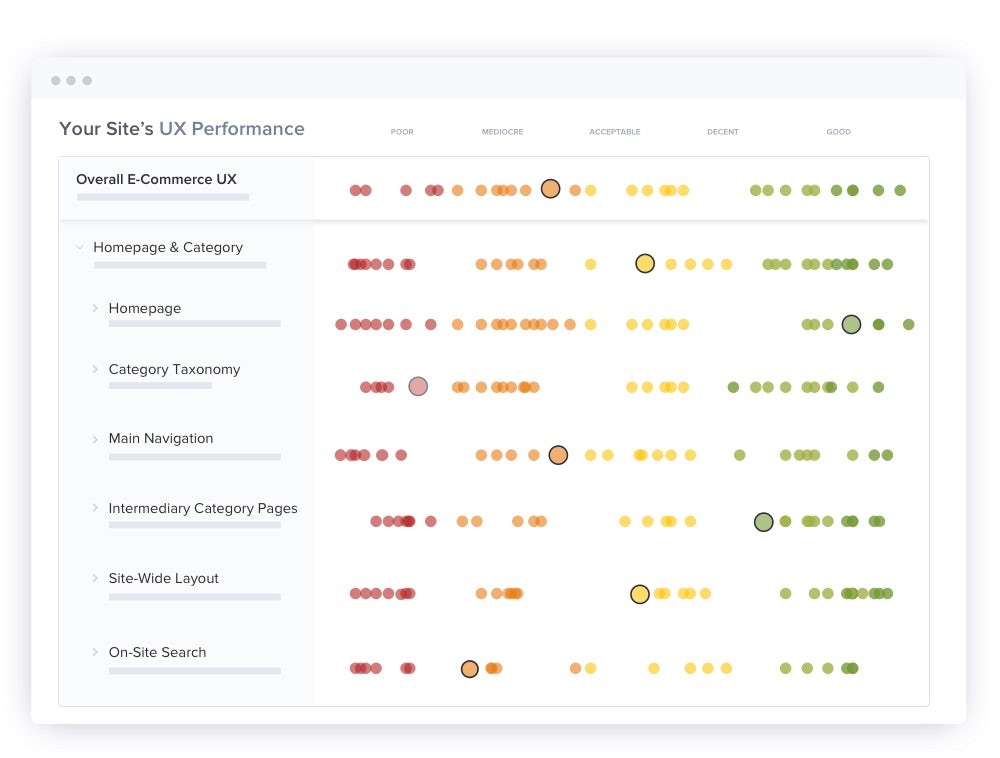
A UX expert from Baymard will perform a full analysis of your site, based on our 130,000+ hours of UX research.
The 120-page audit report will outline 40 improvements for your site, document its UX performance across 500 parameters, and compare it to industry leaders and competitors.
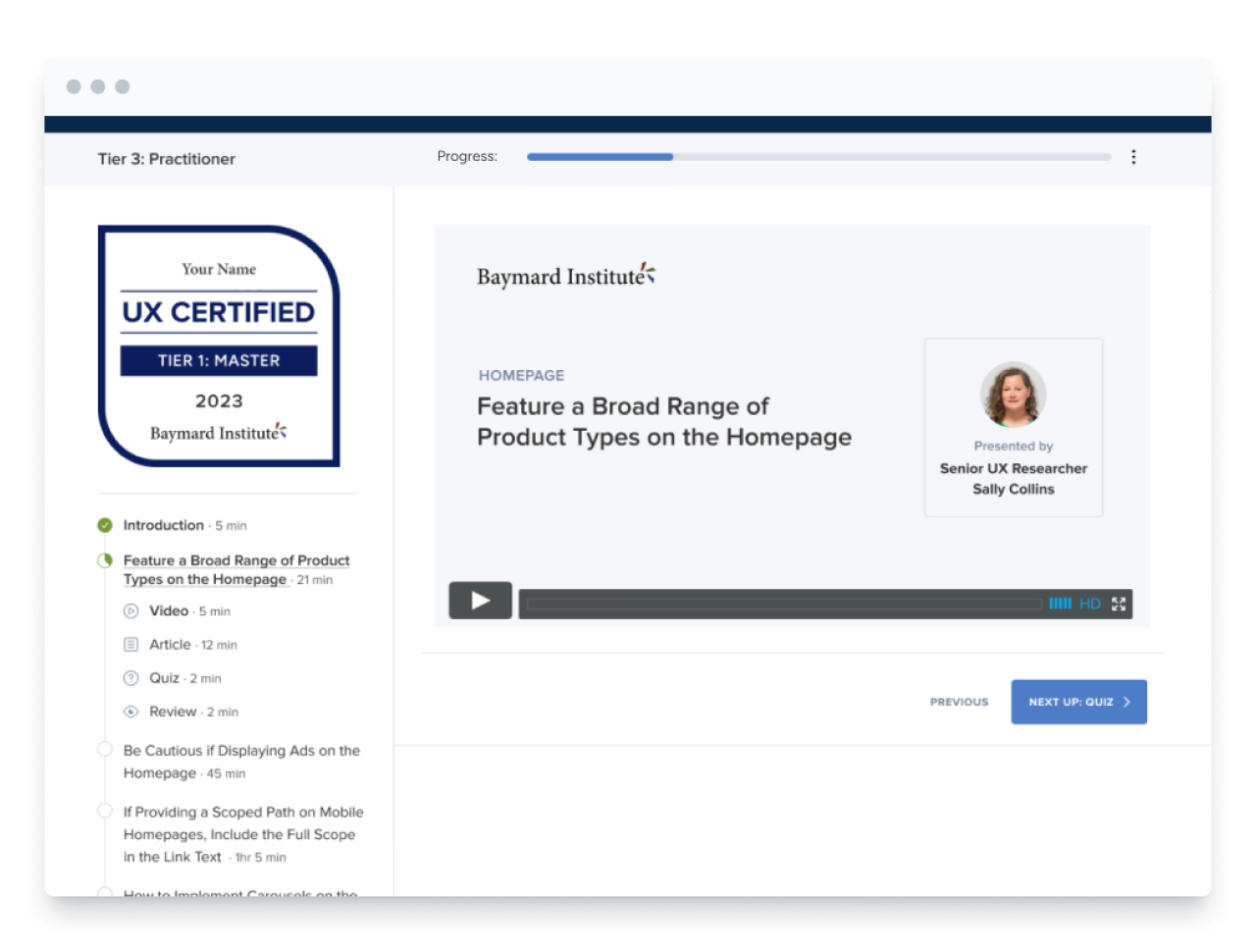
UX Training for Career Growth
100% remote & self-paced courses
Unlock the full potential of your UX team and accelerate your individual career with Baymard's UX training and certification platform. The self-paced courses are based on Baymard’s 130,000+hours of UX research.
There’s 3 difficulty levels to match all UX backgrounds and ambitions, from the uninitiated to the UX veteran. Beyond training and certification, there’s also guest lectures from Google, Luke Wroblewski, Paul Boag, Brad Frost, etc.
What Our Clients Say
Baymard’s research is used by 17,500+ brands, agencies, researchers, and UX designers, across 80+ countries, and includes 71% of all Fortune 500 e-commerce companies.


















“Baymard produces some of the most relevant and actionable user experience research available. They really understand the needs of UX and Product Management professionals, and their deep experience in the eCommerce field allows them to offer sophisticated, nuanced insights.”

“Baymard has been a great resource in helping us improve the customer experience. We are continually applying these best practices to our sites.”

“I can not tell you how much help your benchmark studies have been for our company, e-commerce and UX teams. We have used and continue to use these reports for baseline benchmarks as we build test protocols or eye tracking scripts etc. in lab.”

“Thanks again for the great work on our checkout project. Our whole group found it incredibly insightful. We’re applying the suggestions you provided to our new checkout design which launches at the end of the month! One of my colleagues was also interested in your group’s competitive expertise with regard to responsive web and native apps.”

“Thank you. This was an excellent piece of work: professional, thorough, and actionable for the team. We’re very happy with the work Baymard has done for us.”
“Thank you very much for the 7 usability audits of our country-specific sites. The audits have provided us with specific and actionable advice, allowed us to prioritize development resources, and enabled us to compare UX performance between the 7 different country-specific sites, and against State of the Art implementations. The audit itself is done really professionally, and the recommendations contain actionable and insightful information.”

“Intelligent, consumer-focused insights that are clear and actionable. The team in the room really loved the way the Baymard Institute highlighted the optimizations in the various user experience elements (copy, layout, design, calls-to-action…), from the perspective of consumer struggles. Baymard’s Usability research really complements our other existing research tools.”

“Thank you, this was really insightful!”
“We’ve received some awesome feedback from our Merchant Success team as well as our merchants about all of the UX Audits we’ve had thus far with Baymard. Thank you so much to you and your team for all of your hard work. The pilot with Baymard has been going fantastic and I’m really excited with all that we’re learning! You have an amazing platform, team and super helpful data base for us to work with.”

“I was able to bring these designed solutions home with me and kickoff multiple optimization projects that I am confident will affect the site in a positive way, both in usability and conversion.”
“I just wanted to take a minute to thank you for the amazing work on this audit. You should know that this has been very well received internally and there’s a lot of excitement around adopting the ideas you have shared.”

“Very thorough and professional UX review of our website, based on an extensive amount of previous UX research insights within the industry, and specifically targeted to our needs. We received both critical and, most importantly, constructive feedback, along with actionable, prioritized suggestions and best-practice examples. This will allow us to address the areas of improvement and significantly help ameliorate the experience users have on our website, which in turn is expected to drive conversion rates and reduce the number of customer service requests. We can highly recommend Baymard's UX audit.”

“Damn. The reports that the @Baymard folks do cost money, but they’re worth it.”

“This has been fantastic: really good recommendations, really comprehensive.”

“I can confirm that the list was fully implemented. Every time we put up a change we either A/B test or we watch it very closely to determine that it’s doing better and not the opposite. So I can confirm that these fixes have improved our checkout. Thanks for everything.”
“Excellent tool – looking forward to using it with our other sites and prototypes as they’re developed.”

“We found the audits extremely helpful and validated a number of changes we have been wanting to make or are in the process of making, so thank again for all the great insights.”

“This was indeed very helpful guidance and a very well-documented roadmap for us to fix, validate, organize, collectively understand and continually improve our ecommerce foundation.”

“It is immensely valuable having a thorough, independent study to help validate my work and in particular, help facilitate buy-off from stakeholders. Baymard has quickly become one of my most trusted resources for the UX/UI field.”

“I found the UX audit a very comprehensive evaluation, with clear reports and actionable recommendations. Baymard's commitment to excellence in user experience shines through its thorough approach!”

“Thanks for everything. The audit was extremely useful, I think we have gained valuable insight.”

“This was…mind-blowing. We’ve been having conversations on the side as you’ve been presenting the audit findings. There’s so much to do!”

“These reports are fabulous. The content is exactly what our team has been looking for, and so much more! Extremely helpful, thank you!”

“I have found the M-Commerce and E-Commerce reports very useful, thank you!”

“I’m an avid user of your reports and recommendations. I have leveraged your articles and findings throughout my career in B2B, B2C, and hospitality.”

“The Baymard team has been a delight to work with on the JohnLewis digital platform audit. They responded to the brief very well, have been very accessible for ongoing clarification and queries and Rebecca was excellent in the recent team share, articulately presenting findings in an engaging walk-through with the wider team which will really support driving engagement and a robust response. Many thanks for all the effort and focus folks.”

“The Baymard reports have proven to be an invaluable resource for us. Comprehensive, pragmatic and actionable. We have redesigned our checkout process and made changes to our category pages based on usability guidelines in the reports.”

“Thanks for this audit and your good work. This was exactly what I was aiming for. Also thanks for the very, very professional presentation, and answering all our countless questions. Very good work.”

“I just wanted to let you know that I think your site is the best thousand bucks I’ve ever spent. I wish I found you years ago.”

“First off, thank you. This was the most engrossed I’ve ever been in a 2-hour meeting. This [audit presentation] was incredibly insightful and very helpful. Many, many thanks.”

“We are very excited to finally proceed with the UX improvements, and I truly believe your audit report will be super helpful to put us ahead of the wave. If you ever need a reference, please do not hesitate to share my contact.”

“Baymard has helped so much: UX was a brand new role at my company when I was hired. I was researching, planning, and designing UX & UI for 5 different products, all by myself. After showing real-world, bottom-line results from a UX centered approach to our products, we have expanded our UX team and greatly improved our UX-to-product process. Baymard’s research database was a critical component to my (and my company’s) success. Thank you!”

“Wanted to thank you again for the checkout audit and walking us through the process. It was super helpful and we can’t wait to apply the changes to our checkout for a better user experience.”

“The recommendations in our audit were awesome - well prioritized, actionable and helped us focus on what to optimize. This audit, along with the e-Commerce Reports & Benchmark Databases, are my go-to resources for thorough, insightful information. Thank you!”

“This is awesome so far. Everyone wants to know what's going on – you just got everyone's attention here. Everything that you've called out is definitely eye-opening for us over here.”

“Some time ago we purchased the Ecommerce Homepage & Category report - the research and insights are extremely useful to us and help us a lot in our work!”

“Given the tricky science of conversion rate optimization, it is great to know that you are dealing with professionals whose advice is based on solid research. It was a pleasure collaborating with the Baymard team.”

“Within a very short time Baymard Institute provided 15 clear, useful improvement suggestions for our checkout process. We intend to implement all of them. It’s easy to find companies that offer website improvement suggestions. But, most companies don’t do their homework and don’t provide specific examples of how best to make the improvements. With Baymard Institute, the checkout process suggestions they made were intuitive, specific, and actionable. I highly recommend their audit service.”

“This UX audit has been very helpful, not just for our design and product teams, but even for the UX research team, because we can reference back to the audit, either in the design of a user research session or when we analyze findings. Thank you very much; this has been incredibly valuable.”